Air Purifiers Updated August 5, 2026

Best Air Purifiers Under $100

We read the reviews so you don't have to. Here are the best true-HEPA air purifiers under $100 for bedrooms, offices, and small living rooms.

OUR TOP PICK

LEVOIT Core 300 $84.99

★★★★☆ (4.7/5) 108,400
Best Air Purifiers Under $100
In-Depth Research Thorough product comparisons
Unbiased Reviews Honest recommendations
Time Saved We do the research for you

Top Picks

#1 BEST OVERALL
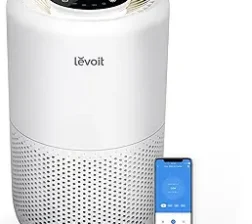
LEVOIT Core 300

LEVOIT Core 300

Best choice for budget-conscious users seeking effective air purification

$84.99 $99.99 -15%

★★★★☆ (4.7/5) 108,400

  • H13 True HEPA Filter
  • Covers up to 1073 ft²
  • 24dB Sleep Mode
  • AHAM Verified Performance

BUY ON AMAZON

We may earn a commission from qualifying purchases.

See full review
#2 RUNNER UP
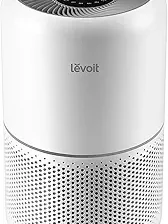
Levoit Core 200S-P

Levoit Core 200S-P

Great for small rooms with smart features

$89.99

★★★★☆ (4.5/5) 105,577

  • Smart & Voice Control
  • 360° Air Intake
  • True HEPA Filtration
  • Quiet Operation at 27dB

BUY ON AMAZON

We may earn a commission from qualifying purchases.

See full review
#3 BUDGET PICK
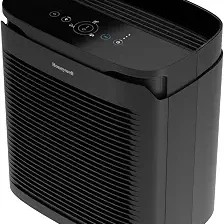
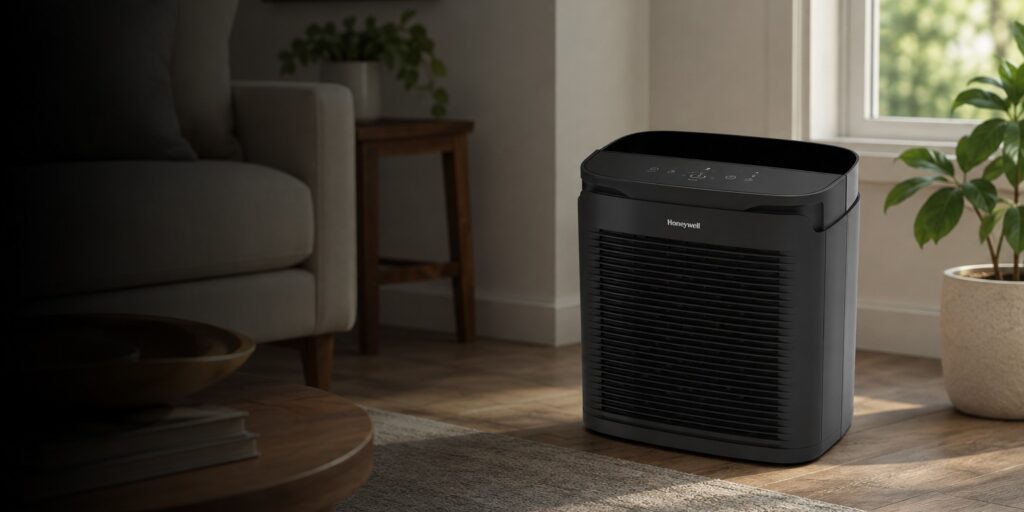
Honeywell PowerPlus HPA3100

Honeywell PowerPlus HPA3100

Affordable option for basic air purification

$69.99

★★★★☆ (4.6/5) 551

  • True HEPA filtration
  • 4 cleaning levels
  • Auto Mode and Touch Controls
  • Filter check/reset indicator

BUY ON AMAZON

We may earn a commission from qualifying purchases.

See full review

Quick Comparison

Feature LEVOIT Core 300 Levoit Core 200S-P Honeywell PowerPlus HPA3100
Price $84.99 $89.99 $69.99
True HEPA Filtration
Captures 99.97% of Particles
Effective for Small Rooms
Quiet Sleep Mode
Compact Design
Affordable Filter Replacements
BUY ON AMAZON BUY ON AMAZON BUY ON AMAZON

* Pricing subject to change.

Our Scorecard

How our top picks scored on the factors that matter most, rated 0–10.

Criteria LEVOIT Core 300 Levoit Core 200S-P Honeywell PowerPlus HPA3100
CADR per Dollar
9/10
7/10
8/10
Room Coverage
8/10
7/10
7/10
Noise Level
9/10
9/10
6/10
Smart Features
4/10
9/10
4/10
Filter Cost
9/10
8/10
6/10
Value
6/10
5/10
9/10
Overall 7.4 7.4 6.8

Scores are our editorial assessment, weighing verified-buyer ratings, review volume, features, and value.

Detailed Reviews

#1 BEST OVERALL

LEVOIT Core 300

$84.99
★★★★☆ (4.7/5) 108,400
Buy on Amazon

If you're looking for an affordable air purifier that effectively tackles allergens and operates quietly, the LEVOIT Core 300 is a solid choice for small rooms.

What Reviewers Say

The LEVOIT Core 300 air purifier is a popular choice for those seeking an affordable yet effective solution for improving indoor air quality in small to medium-sized rooms. With its H13 True HEPA filter, the Core 300 effectively captures 99.97% of airborne particles as small as 0.3 microns, making it ideal for allergy sufferers and pet owners. Users appreciate the quiet operation, especially in Sleep Mode, where it operates at a whisper-quiet 24dB, allowing for undisturbed sleep.

The purifier's compact design ensures it fits seamlessly into any room decor, and its portability allows users to move it between rooms as needed. However, the Core 300 lacks an air-quality sensor and auto mode, requiring manual adjustments to fan speed. While it performs well in removing dust and allergens, its thin activated carbon layer is less effective at neutralizing strong odors and VOCs.

Additionally, new filters may emit a chemical smell initially, though this typically dissipates with use. Overall, the LEVOIT Core 300 is a strong contender in the budget air purifier category, offering reliable performance and ease of use at an attractive price point.

Pros

  • Strong CADR for the price
  • Quiet operation on low settings
  • Affordable filter replacements
  • Compact and simple design
  • Good for pet owners

Cons

  • No air-quality sensor or auto mode
  • Weak on strong odors and VOCs
  • New filters may off-gas initially

Best For

This air purifier is best suited for budget-conscious individuals living in small to medium-sized spaces who are looking for a reliable solution to combat allergens, pet dander, and dust. It's particularly beneficial for those who prefer a quiet environment and are willing to manually control settings.

Key Specifications

Clean Air Delivery Rate (CADR) 143 CFM for smoke, 153 CFM for dust, 167 CFM for pollen
Noise Level 24-50 dB
Filter Type H13 True HEPA
Room Coverage Up to 1073 ft²
Power Consumption 56W
Dimensions 8.7 x 8.7 x 14.2 inches
#2 RUNNER UP

Levoit Core 200S-P

$89.99
★★★★☆ (4.5/5) 105,577
Buy on Amazon

If you need a quiet, efficient air purifier for a small space and appreciate smart features, the Levoit Core 200S-P is a great value choice, but consider larger models for bigger rooms.

What Reviewers Say

The Levoit Core 200S-P air purifier is a popular choice for those seeking cleaner air in small spaces like bedrooms and offices. Users appreciate its quiet operation, especially in Sleep Mode, making it ideal for nighttime use. The purifier's smart features, including app and voice control, are well-received, allowing for convenient operation.

Its true HEPA filtration effectively captures dust, pollen, and pet dander, improving air quality noticeably. However, its low Clean Air Delivery Rate (CADR) limits its effectiveness to smaller rooms, and it lacks an air-quality sensor and auto mode, which means it can't automatically adjust to changing air conditions. Some users report a high-pitched noise at higher fan speeds, which can be bothersome.

Despite these drawbacks, the Core 200S-P is considered good value for its price, especially for those who prioritize quiet operation and smart features. It's best suited for small rooms and those looking for an affordable, efficient air purifier.
Pros

  • Quiet in Sleep Mode
  • Effective for Small Rooms
  • Smart App Control
  • True HEPA Filtration
  • Energy Efficient

Cons

  • Low CADR for Larger Rooms
  • No Auto Mode
  • High-Pitched Noise at High Speeds

Best For

This air purifier is best for individuals living in small apartments or those who need a quiet, effective solution for bedrooms or home offices. It's ideal for tech-savvy users who appreciate smart control features and are looking for a budget-friendly option.

Key Specifications

CADR 118 CFM
Room Size Up to 360 sq ft
Noise Level 24-49.1 dB
Filter Type True HEPA
Smart Control App & Voice
Energy Consumption 25-28 W max
#3 BUDGET PICK

Honeywell PowerPlus HPA3100

$69.99
★★★★☆ (4.6/5) 551
Buy on Amazon

For those needing a basic, effective air purifier for small to medium rooms, the Honeywell PowerPlus HPA3100 offers great value, though be prepared for higher running costs and limited features.

What Reviewers Say

The Honeywell PowerPlus HPA3100 is a budget-friendly air purifier designed for medium to large rooms up to 200 sq ft. It features a true HEPA filter, capturing 99.97% of microscopic allergens, making it ideal for pet owners and allergy sufferers. Users appreciate its effective particle capture, portability, and long lifespan, often running it 24/7.

The purifier operates with 4 cleaning levels, including an auto mode, but lacks smart features like app connectivity or sensors. Despite a low upfront cost, the annual operating cost is relatively high, primarily due to filter replacements. While the unit is praised for its performance, it is noted to be loud on higher settings, and its claimed coverage area of 968 sq ft is misleading, as real-world usage suggests effective coverage around 200 sq ft.

Overall, it's a solid choice for those seeking basic air purification without advanced features, offering good value for its price.

Pros

  • Effective basic particle capture
  • Portable and lightweight
  • Reliable and long-lived
  • Affordable upfront cost
  • Easy-to-find third-party filters

Cons

  • High annual running cost
  • Loud on high settings
  • Lacks smart features

Best For

This air purifier is best suited for budget-conscious buyers seeking effective air purification in medium-sized rooms without the need for smart features. It's ideal for pet owners and allergy sufferers who prioritize basic functionality over advanced technology.

Key Specifications

Coverage Area 200 sq ft
CADR Dust 138 / Smoke 129 / Pollen 145
Noise Levels Low 41 dB / Medium 46 dB / Turbo 54 dB
Annual Operating Cost $220
Weight 10 lb
Filter Type True HEPA and Carbon Pre-Filter

How to Choose an Air Purifier Under $100

Read the Room-Size Claim With a Healthy Dose of Suspicion

The single most misleading number on any air purifier box is the coverage claim. A $70 unit will proudly say it covers 1,000+ square feet — and technically it does, at one air change per hour. That’s nowhere near enough to actually keep a room clean. Experts recommend roughly four to five air changes per hour (ACH) for allergy or smoke relief, which means the honest coverage figure is closer to one-quarter of what’s advertised. A good shortcut: take the marketing square-footage and divide by four.

The number that doesn’t lie is CADR (Clean Air Delivery Rate), measured in CFM — look for a model with an AHAM-verified CADR rather than a vague marketing figure. Independent testing labs like RTINGS and HouseFresh measure real-world clean-air performance, and their numbers are usually lower than the box. For a bedroom or office up to about 300 sq ft, aim for a CADR in the ~120–180 CFM range; anything under ~100 CFM is really a small-room or personal-desk device, no matter what the box says.

True HEPA vs. “HEPA-Type” — The Difference Matters

“True HEPA” (often labeled H13) captures 99.97% of particles down to 0.3 microns — pollen, dust, dander, and most smoke. “HEPA-type,” “HEPA-like,” or “99% filtration” is a weaker, uncertified filter that lets noticeably more through. The EPA’s guide to home air cleaners is a good primer on what filtration actually does (and doesn’t) do. Under $100 you do not have to settle: every purifier we recommend uses a genuine true-HEPA filter.

Most budget units stack three stages — a pre-filter for hair and large dust, the HEPA layer for fine particles, and a thin activated-carbon layer for odors. Just know that the carbon in cheap purifiers is thin, so they take the edge off cooking and pet smells but are not dedicated odor or VOC machines.

The Real Cost Is the Filters, Not the Purifier

A $70 purifier that eats $120 a year in filters is more expensive than a $90 one that runs on $30 generics. Before you buy, check two things: how often the filter needs replacing (typically every 6–12 months) and whether the brand allows third-party filters. Some budget brands lock you into proprietary, OEM-only filters that cost nearly as much as the whole unit — and a few even claim third-party filters void the warranty.

Brands with a huge installed base, like Levoit, have a healthy market of cheaper compatible filters, which quietly makes them the better long-run value even when the sticker price is similar.

Noise: You're Really Buying It for the Low Setting

Almost every purifier in this price range is quiet on low and loud on high. Sleep or low mode usually measures a genuinely unobtrusive 24–33 dB — fine for a bedroom or nursery. But on the highest fan speed, the same unit can hit 50–60 dB, which is too loud for a bedroom and audible over a TV. Independent reviewers such as RTINGS publish measured dB figures at each fan speed, which are far more reliable than the single quietest number a brand likes to advertise.

The practical takeaway: size the purifier so it does its job on medium. If you have to run a small unit on max to keep up with the room, you’ve bought too little machine — and you’ll hate the noise.

Smart Features Worth Paying For — and the Ones That Aren’t

The one smart feature that genuinely earns its keep is a real air-quality (PM2.5) sensor paired with auto mode: the purifier speeds up when it detects cooking smoke or a pollen spike and idles back down when the air is clean, so you don’t have to babysit it. That combination is worth a small premium.

Everything else — app dashboards, voice control, scheduling, mood lighting — is convenience, not cleaning. A model with app control but no sensor still runs blind. And watch the Wi-Fi setup: most budget units are 2.4 GHz-only, which trips up some modern mesh routers during pairing.

Skip the Ozone: A Word on Ionizers and UV-C

Some cheap purifiers add an ionizer or UV-C stage as a marketing bullet. Ionizers can emit small amounts of ozone, a lung irritant — the EPA warns against ozone-generating air cleaners, and California maintains a list of certified, low-ozone devices. Independent testers also repeatedly find the UV-C lamps in budget units too weak and too fast-moving to kill much of anything. A few models run the ionizer always-on with no way to disable it.

Our advice is simple: for clean air under $100, you want straightforward mechanical HEPA filtration. If a unit has an ionizer, make sure you can switch it off — and if it’s the headline feature instead of a real HEPA filter, skip it.

Match the Purifier to Your Actual Problem

Allergies and dust: prioritize true HEPA and a CADR high enough for real 4–5 ACH coverage in your room. Pairing a purifier with a good robot vacuum to keep floor dust and dander down makes a bigger difference than either alone.

Pets: look for a washable pre-filter (it saves the HEPA from clogging with fur) and decent carbon for litter and “wet dog” odors — a natural companion to a self-cleaning litter box if odor control is the goal.

Smoke: wildfire season and cigarette smoke demand the highest CADR you can afford; when the air is truly bad, running the unit on high in the room you’re actually in beats trying to cover the whole house with one small purifier.

FAQs

Do cheap air purifiers under $100 actually work?

Yes — for a single room. A good sub-$100 true-HEPA unit can noticeably clear dust, pollen, dander, and smoke from a bedroom or office in under an hour. The catch is coverage: the 1,000+ sq ft claims on the box are measured at just one air change per hour, so treat any budget purifier as a one-room device, not a whole-home solution.

What's the difference between “true HEPA” and “HEPA-type”?

True HEPA (often labeled H13) is certified to capture 99.97% of particles down to 0.3 microns. “HEPA-type” or “HEPA-like” is an uncertified, weaker filter that lets noticeably more through. Under $100 you don't need to compromise — stick with true HEPA.

How much do replacement filters cost per year?

Budget on roughly $40–$120 a year depending on the model. Filters typically last 6–12 months. The big swing factor is whether the brand allows cheaper third-party filters (Levoit does) or locks you into proprietary OEM-only ones that can cost nearly as much as the purifier itself.

What size air purifier do I need for my room?

Match the CADR (Clean Air Delivery Rate) to your room, and ignore the marketing square-footage — divide it by about four to get the honest figure. For a room up to ~300 sq ft, aim for a CADR around 120–180 CFM so the unit can deliver 4–5 air changes per hour without running flat-out.

Are the ionizers and UV-C in cheap purifiers safe?

They're the parts to be wary of. Ionizers can produce small amounts of ozone, a lung irritant, and the EPA specifically cautions against ozone-generating air cleaners. Independent testers also find the UV-C lamps in budget units too weak to do much. Look for a model that's primarily mechanical HEPA, and if it has an ionizer, make sure you can turn it off.

How much does it cost to run an air purifier 24/7?

Very little. Most sub-$100 HEPA units draw only about 6–45 watts, so running one continuously typically costs a few dollars a month in electricity — far less than people expect. The ongoing cost that actually matters is filters, not power.

What's the best cheap air purifier for allergies and dust?

For allergies you want genuine true-HEPA filtration and enough CADR to turn the air over 4–5 times an hour in your room. Running it on auto with a PM2.5 sensor helps it react to pollen spikes, and keeping floors clean with a vacuum reduces the dust load the purifier has to handle.

What's the best budget air purifier for pets and pet hair?

Look for a washable pre-filter, which stops fur from clogging the HEPA layer, plus an activated-carbon stage for litter and pet odors. Pet homes also clog filters faster, so factor replacement cost into the decision.

Can a sub-$100 purifier handle wildfire or cigarette smoke?

It can help in one room if you buy the highest CADR you can afford and run it on a high setting during the worst air. For heavy, sustained smoke, a single small purifier can't clean a whole house — concentrate it in the room you're actually in, or add a DIY box-fan filter for large open spaces.

Is a smart air purifier with an app worth it?

The feature worth paying for is a real PM2.5 air-quality sensor with auto mode — it ramps the fan up for cooking smoke or pollen and idles down when the air is clean. App control, voice, and scheduling are just convenience; a model with an app but no sensor still runs blind.

Ready to Make Your Choice?

Check out our top pick and see why thousands of readers trust our recommendations.

See Our #1 Pick →
LEVOIT Core 300

#1 PICK: LEVOIT Core 300

Best Budget Air Purifier for Small Rooms

VIEW